
Why outdated business processes can create hidden risks, and three areas every growing organization should review.
The Process That Worked Yesterday May Be Holding You Back Today
“We've always done it this way.”
It's a phrase heard in businesses and nonprofits every day. And sometimes, there's a good reason behind it. The process worked, the team understood it, and there wasn't much reason to change.
But what happens when the organization grows and the process doesn't?
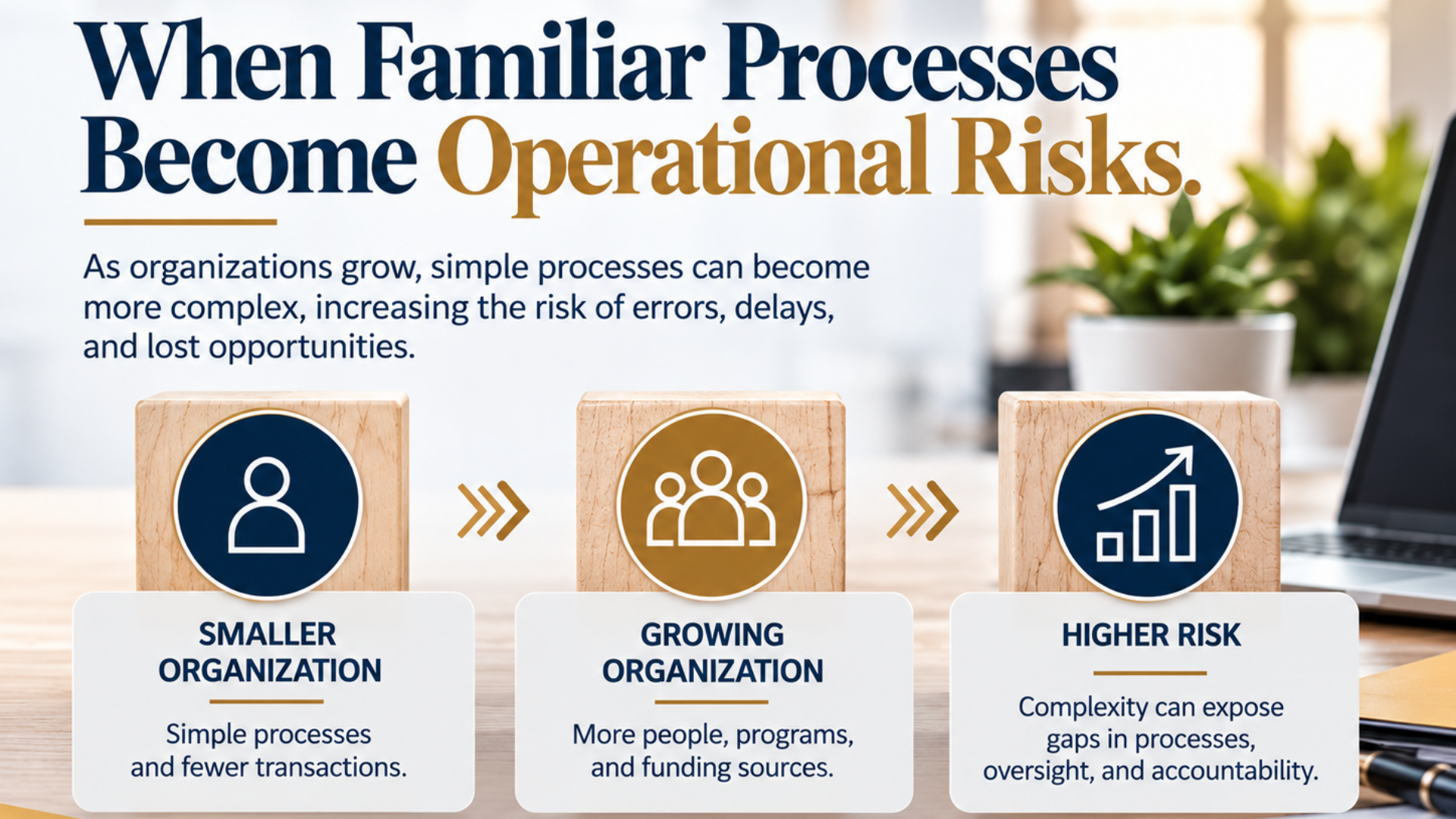
More employees, more transactions, new funding sources, and greater responsibilities can turn once-simple routines into operational risks.
The problem isn't necessarily how the process started. It's whether the process still works for the organization you've become.
How Informal Processes Become Hidden Risks
Most organizations don't start with complicated systems and procedures. They develop practical ways to get things done.
The founder approves every purchase. One employee manages vendor relationships. A longtime team member knows exactly how reports are prepared. Everyone understands the routine, even if nothing is documented.
And for a while, it works.
But as the organization grows, those informal arrangements can become harder to manage. Responsibilities overlap, approvals become inconsistent, information gets scattered, and employees develop their own workarounds to keep things moving.
What once made the organization efficient can eventually create delays, errors, unnecessary costs, or gaps in accountability.
Just because a process is familiar doesn't mean it's still effective.
That's why periodically reviewing how work actually gets done is important. Not every process needs to be redesigned, but leaders should understand which ones are still supporting the organization and which may be creating unnecessary risk.
Three Processes That Commonly Outgrow Their Original Setup
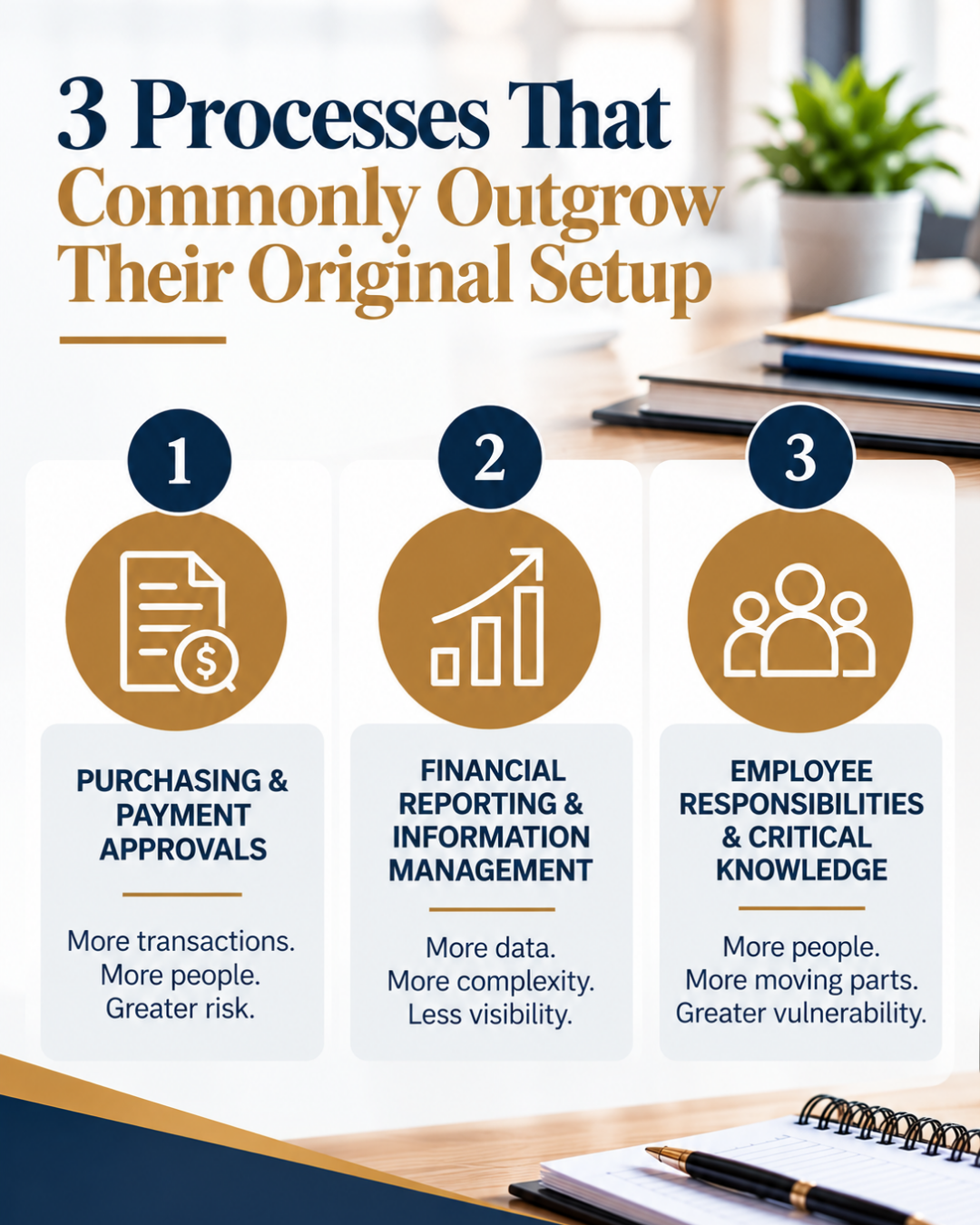
1. Purchasing and Payment Approvals
In a small organization, having the owner or executive director approve every purchase may seem like the easiest way to maintain control.
But as transaction volume increases, that approach can create bottlenecks. Employees may wait days for approvals, urgent purchases may bypass the process, or responsibilities may become unclear.
The opposite can also happen: too many employees gain purchasing authority without consistent oversight.
What can go wrong? Duplicate payments, unauthorized purchases, delayed operations, and limited visibility into spending.
What to do instead: Establish clear approval limits, define who can authorize different types of purchases, and introduce periodic reviews of financial activity.
The goal is to maintain accountability without making every transaction unnecessarily complicated.
2. Financial Reporting and Information Management
Early on, a few spreadsheets and monthly financial statements may provide everything leadership needs.
But as an organization adds programs, customers, locations, or funding sources, those same reports may no longer provide enough visibility.
Employees may spend hours manually combining information, different departments may use conflicting numbers, and leaders may struggle to understand what's driving financial performance.
What can go wrong? Reporting errors, delayed decisions, budget overruns, and missed warning signs.
What to do instead: Review what information leadership actually needs, standardize reporting procedures, reduce unnecessary manual work, and establish regular financial reviews.
Good reporting should do more than tell leaders what happened. It should help them understand what needs attention.
3. Employee Responsibilities and Critical Knowledge
Every organization has that person who seems to know everything.
They're the one everyone calls when a process doesn't work, a report needs to be prepared, or someone can't locate important information.
While experienced employees are valuable, relying too heavily on one person can create significant operational vulnerability.
As responsibilities increase, informal knowledge-sharing may no longer be enough.
What can go wrong? Missed deadlines, inconsistent work, operational disruption, and difficulty transitioning responsibilities when employees leave or become unavailable.
What to do instead: Document critical procedures, clarify ownership of important tasks, cross-train employees, and establish backup responsibilities.
The objective isn't to make employees replaceable. It's to make the organization more resilient.
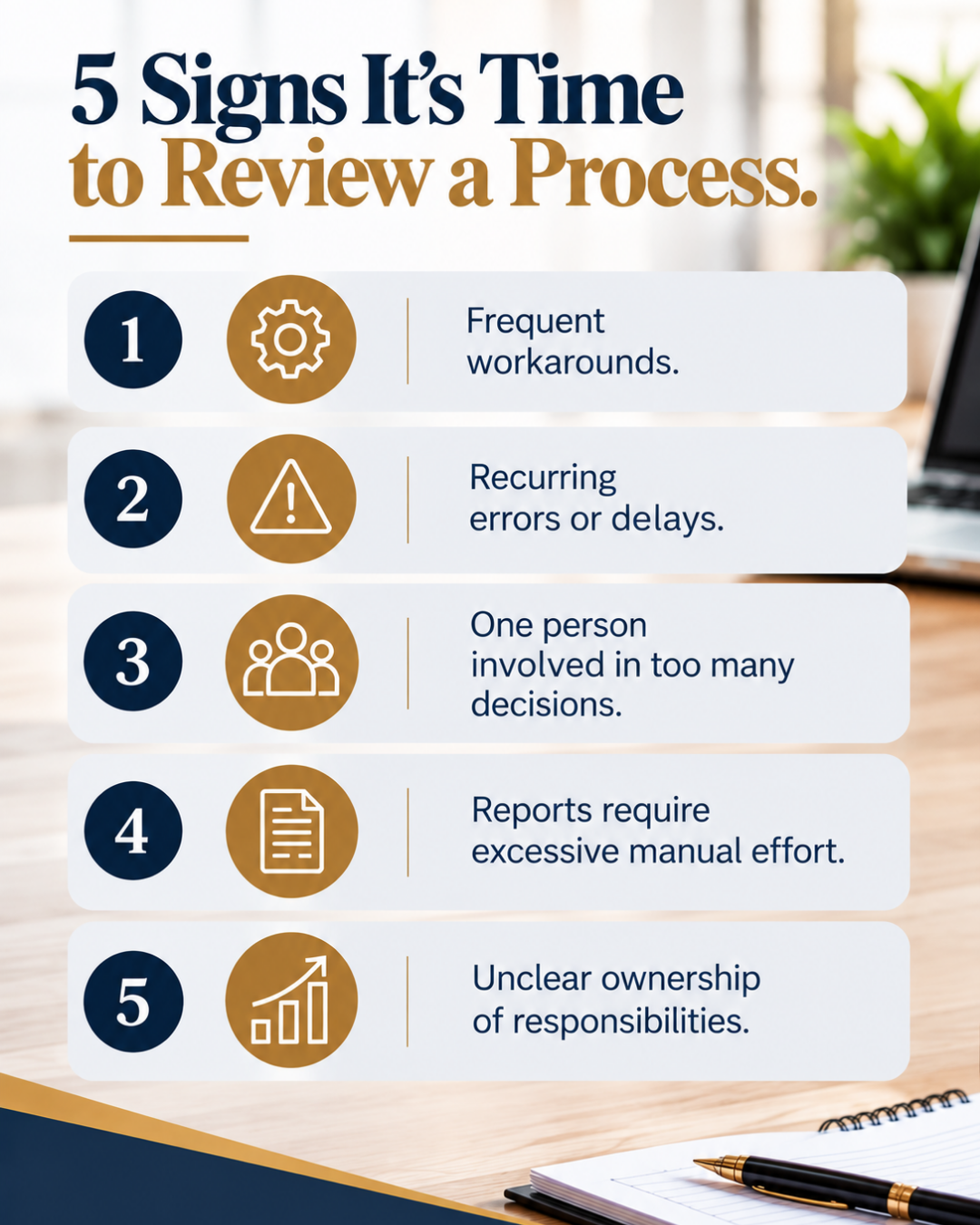
How Do You Know When It's Time to Review a Process?
You don't need to wait for a major problem to recognize that something isn't working.
Sometimes the warning signs are already there:
Employees regularly create workarounds to complete routine tasks.
The same errors or delays keep happening.
One person must be involved in nearly every decision.
Reports require excessive manual effort or frequent corrections.
Nobody is completely sure who owns a particular responsibility.
These issues may seem minor individually, but together they can signal that the organization's processes haven't kept pace with its needs.
A practical review starts with understanding how work happens today, identifying where problems or risks occur, and determining what changes would make the process more effective.
The goal isn't to create more rules. It's to make work easier, accountability clearer, and risks more manageable.
Don't Let Yesterday's Processes Limit Tomorrow's Growth
The way an organization operates should evolve as the organization evolves.
A process that worked with five employees may not work with twenty. A reporting approach designed for one program may not support five. An approval process that once provided oversight may now be slowing everything down.
The solution isn't necessarily new technology, more employees, or a lengthy policy manual.
Sometimes it's as simple as clarifying responsibilities, eliminating unnecessary steps, improving documentation, or strengthening a review that already exists.
Small process improvements today can prevent much bigger financial and operational problems tomorrow.
At LU Advisory Group, we believe organizations should periodically examine how they actually operate, not just whether the numbers look right. Understanding the processes behind the results helps leaders identify risks, improve efficiency, and make more confident decisions.