
Are You Audit-Ready, Grant-Ready, or Contract-Ready? Why Financial and Operational Readiness Matters Before Your Next Opportunity
Financial controls, documentation, compliance, and reporting may not be the most exciting parts of growth, but they can determine whether your organization is ready for what comes next.
The Opportunity You’ve Been Waiting For Could Expose the Gaps You’ve Been Overlooking
Imagine receiving approval for a major grant, winning a government contract, or securing financing to expand your business. It's the opportunity you've been working toward. Then the questions start coming.
Can you provide accurate financial reports? Are your policies documented? Can you demonstrate how funds are spent? Who approves purchases? Can you produce the records needed to support your expenses?
Suddenly, the opportunity comes with a long list of requirements your organization may not be prepared to meet.
The challenge isn't always getting the opportunity. Sometimes it's having the right processes in place to manage it.
Being Financially Stable Doesn't Always Mean You're Ready
An organization can have steady revenue, a committed team, and a strong reputation while still having significant gaps in its financial and operational processes.
For example, a nonprofit may have successfully managed smaller grants for years but struggle when a larger funder requires detailed expense tracking, documented approvals, and periodic financial reporting.
A small business may have the technical expertise to deliver a government contract but lack the purchasing procedures, accounting records, or internal controls needed to meet contractual requirements.
Or an organization may be growing quickly without updating the processes it established when it had fewer employees, fewer transactions, and less complexity.
These gaps don't necessarily mean the organization is poorly managed. They often mean its infrastructure hasn't kept pace with its growth.
And when a major opportunity arrives, those weaknesses can become much harder to ignore.
What Does Audit-Ready, Grant-Ready, or Contract-Ready Actually Mean?
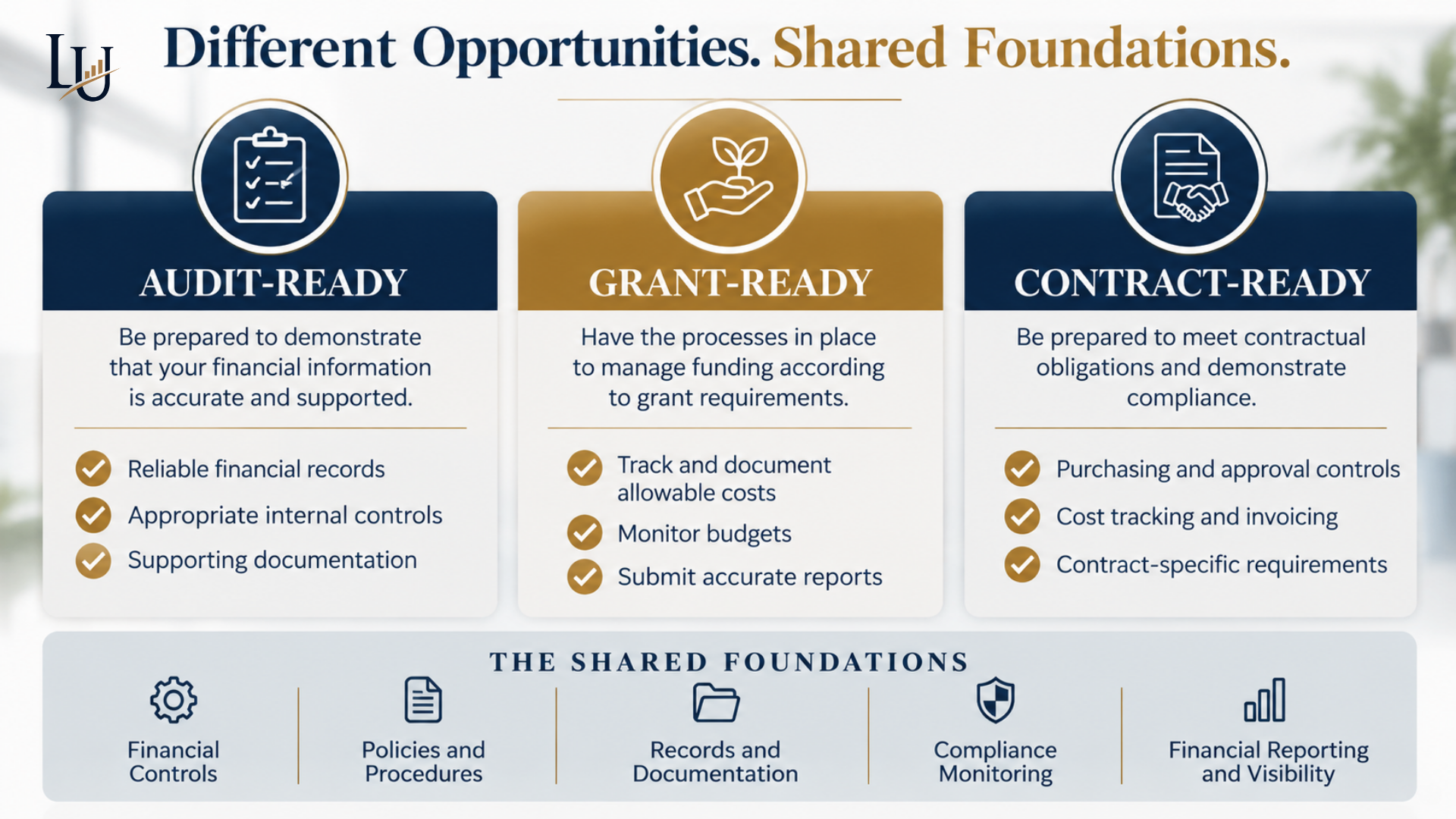
Although the requirements vary, these three types of readiness have something important in common: the ability to demonstrate that your organization manages resources responsibly and can support the information it reports.
Audit-ready means maintaining reliable financial records, appropriate controls, reconciliations, and supporting documentation so financial activity can be reviewed and verified. Being audit-ready doesn't mean an audit will uncover no findings. It means your organization is prepared to demonstrate how its financial information was developed and supported.
Grant-ready means having the financial and administrative capacity to manage funding according to the grant agreement. That can include tracking expenditures, documenting allowable costs, monitoring budgets, maintaining supporting records, and submitting accurate reports.
Contract-ready means being prepared to meet the financial, operational, documentation, and reporting obligations associated with a contract. Depending on the opportunity, this may include purchasing controls, cost tracking, invoicing procedures, cybersecurity requirements, and other contractual obligations.
These are not three completely separate systems.
A well-designed financial and operational infrastructure can support all three.
Five Areas That Can Make or Break Organizational Readiness
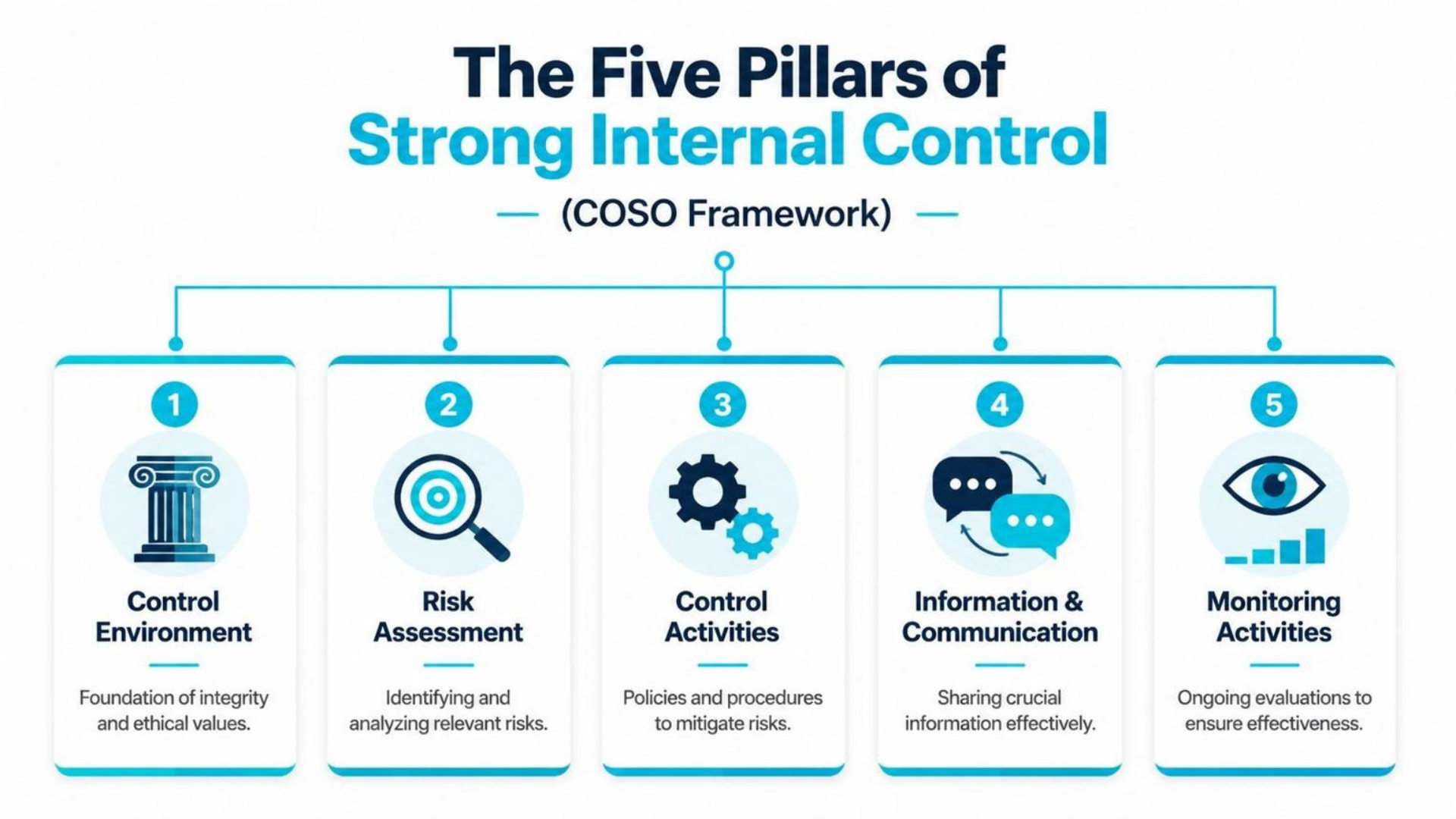
Before pursuing a major funding or contracting opportunity, leaders should take a closer look at five foundational areas.
Financial Controls and Oversight
Who can approve payments? Who can create vendors? Who reviews financial transactions? Are bank accounts reconciled and independently reviewed?
Clear responsibilities and appropriate oversight help reduce the risk of errors, unauthorized activity, and financial loss.
Smaller organizations may not have enough employees to separate every responsibility, but they can often introduce practical safeguards, such as independent reviews, approval limits, and periodic monitoring.
Documented Policies and Procedures
A process that exists only in someone's head is difficult to demonstrate, monitor, or consistently follow.
Written policies and procedures help employees understand how transactions should be handled, who has authority, what documentation is required, and when exceptions need additional approval.
The goal isn't to create a large policy manual that nobody uses. It's to document the processes that matter and ensure they reflect how the organization actually operates.
Reliable Records and Supporting Documentation
Can your organization quickly locate invoices, contracts, approvals, receipts, payroll records, and other supporting information?
Poor recordkeeping can create significant challenges during audits, grant monitoring, reimbursement requests, and contract reviews.
An expense may be legitimate, but without adequate documentation, the organization may struggle to demonstrate that it was properly authorized, incurred, and eligible for reimbursement.
Compliance Monitoring
Receiving funding or signing a contract creates obligations that continue long after the agreement is executed.
Organizations need to understand applicable requirements, assign responsibility for monitoring them, and establish procedures to identify potential issues early.
For grant-funded organizations, this may include allowable costs, procurement requirements, reporting deadlines, and restrictions on how funds can be used.
For contractors, the requirements may involve invoicing, labor documentation, cost allocation, information security, or other terms specific to the agreement.
Financial Reporting and Management Visibility
Accurate financial reports are important, but leaders also need information they can use to make decisions.
Can you determine whether a program is operating within budget? Can you identify a potential cash shortfall? Can you distinguish restricted funding from resources available for general operations?
Timely, meaningful reporting allows leadership to identify problems earlier, make adjustments, and demonstrate accountability to funders, lenders, customers, and governing boards.

When Readiness Gaps Become Expensive Problems
The consequences of weak financial and operational processes can extend far beyond extra paperwork.
Consider a nonprofit that receives a grant but doesn't consistently document whether expenses meet the funding requirements. During an audit or monitoring review, the organization may be asked to reconstruct records, explain transactions, and demonstrate that expenditures were allowable.
If the organization cannot adequately support those costs, it could face questioned expenses, repayment obligations, additional monitoring, or corrective action requirements.
And the impact doesn't necessarily stop there.
Unresolved or repeated audit findings can create additional scrutiny and potentially affect future funding opportunities. Addressing these issues may also require significant staff time, outside assistance, revised procedures, and additional reporting.
The same challenges can arise for businesses pursuing larger contracts or financing. Weak documentation, unreliable reporting, or inadequate controls can delay opportunities or raise concerns about an organization's ability to meet its obligations.
That's why financial and operational readiness shouldn't begin when an audit is scheduled, a grant is awarded, or a contract is signed.
The best time to identify and address these gaps is before they become barriers to growth.
A periodic financial and operational review can help organizations understand where processes may be weak, where responsibilities are unclear, and where improvements are needed to support future opportunities.
You don't need perfect systems or unnecessary layers of approval. You need practical processes that protect your organization, support accountability, and grow with your business.
Because the next big opportunity shouldn't be the moment you discover your organization wasn't ready.